
Events
14.09.2025
OPEN HERITAGE DAY 2025
14.09.2025

Sunday, 14 September 2025, 10 am–6 pm
The Weissenhof Museum in the Le Corbusier House invites you to Open Heritage Day – with free admission and free guided tours.
On Sunday, 14 September 2025, the Weissenhof Museum in the Le Corbusier House will once again take part in the nationwide Open Heritage Day® – Germany’s largest cultural event and national contribution to the European Heritage Days. Anyone interested in architecture is cordially invited to get to know the Weissenhof Estate (even) better by visiting the Weissenhof Museum or taking a guided tour of the listed estate.
PROGRAMME ON OPEN HERITAGE DAY®
10 am–6 pm
Free admission to the Weissenhof Museum in the Le Corbusier House
Location: Weissenhof Museum in the Le Corbusier House, Rathenaustr. 1, 70191 Stuttgart
11 am, 1 pm, 3 pm and 5 pm
Free guided tours of the Weissenhof Estate (in German, no interior visits) offer exciting insights into the estate’s origins in 1927, its architecture and its international significance in 45 minutes.
Meeting point: At the advertising column opposite the entrance to the Weissenhof Museum in the Le Corbusier House.
Duration: 45 minutes. No registration required.
The Weissenhof Museum team looks forward to welcoming many visitors.
Further information on the Germany-wide programme can be found at:
www.tag-des-offenen-denkmals.de
Important information regarding travel:
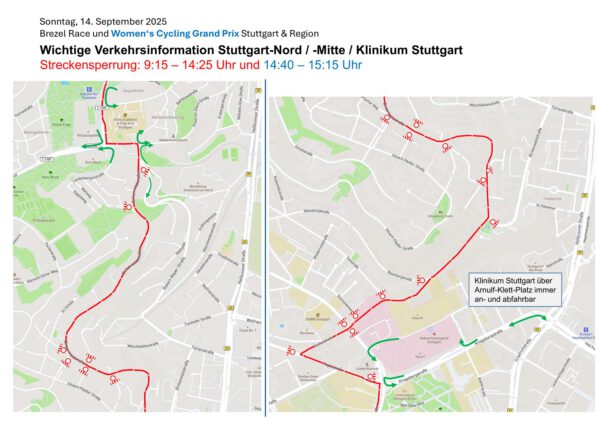
On Sunday, 14 September 2025, the two cycling events ‘Brezel Race’ and ‘Women’s Cycling Grand Prix’ will take place in Stuttgart. This will result in traffic restrictions in Stuttgart and the surrounding area between 9:15 am and 2:25 pm, which will also affect the area around the Weissenhof Museum. During this period, the museum will remain accessible via the Killesberg underground station and the Nordbahnhof S-Bahn station. Please check the current traffic situation in advance and plan your route accordingly.
We wish you a pleasant journey and look forward to your visit!
Traffic information can be found on the event website.
13.09.2025
Urban Sketchers visit the Weissenhofsiedlung –
report by SWR Kultur
report by SWR Kultur
13.09.2025
Urban Sketchers Germany Meeting 2025 in Stuttgart
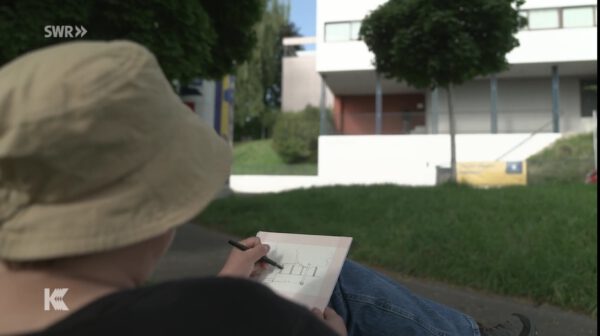
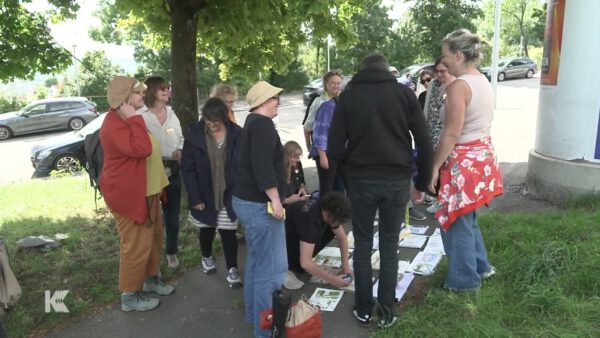
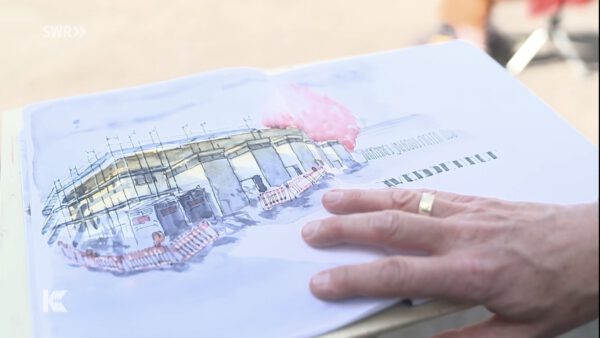
On 13 September 2025, the Urban Sketchers were out and about in the Weissenhof Estate as part of the Germany Meeting 2025. With a great deal of creativity, they captured the special architecture in their own personal way through drawing – accompanied by SWR Kultur.
The resulting report was broadcast on Sunday, 21 September 2025,
and is available in the ARD Mediathek.
The atmosphere of the day was wonderfully captured in the SWR report.
A big thank you to the film crew and to all the Urban Sketchers for the many different perspectives and the insight into their wonderful hobby!
23.07.2025
Groundbreaking ceremony for the Weissenhof.Forum –
time capsule handed over for the foundation stone
time capsule handed over for the foundation stone
23.07.2025
Joint press release by
IBA’27 – Internationale Bauausstellung 2027 StadtRegion Stuttgart,
Freunde der Weissenhofsiedlung e.V. and the state capital Stuttgart
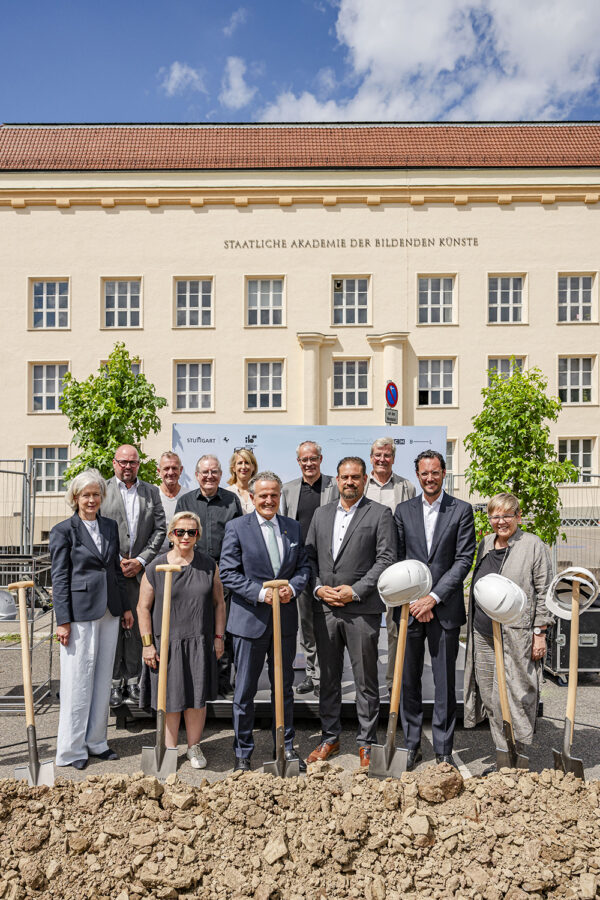
The construction of the new Weissenhof.Forum officially began with the groundbreaking ceremony today, Wednesday, July 23 at 11 am. This was the starting signal for one of the central projects of the Internationale Bauausstellung 2027 StadtRegion Stuttgart (IBA’27).
As part of the groundbreaking ceremony, a time capsule was handed over to the construction company – a greeting to posterity and a sign of the beginning of a new era at the historic site.
“The Weissenhof Estate makes Stuttgart a globally recognized city of innovative architecture and modern architecture. The Le Corbusier houses of the Weissenhof Estate even became a UNESCO World Heritage Site in 2016. The Weissenhof Forum will pay tribute to this World Heritage Site and take a look into the future of architecture.”
– Lord Mayor Dr. Frank Nopper
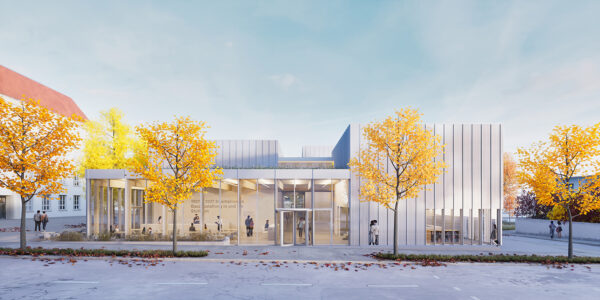
The Weissenhof.Forum, which is being built at the entrance to the world-famous Weissenhof Estate, will in future serve as a central information and starting point for visitors. It combines exhibition areas, a media room, a store, catering facilities and event and work areas. The new building places particular emphasis on sustainability: constructed using wood and clay with a photovoltaic façade and a green roof, the building aims to achieve a climate-neutral plus-energy standard.
“Almost one hundred years ago, the Werkbundsiedlung at Weissenhof was built in just four and a half months, making a statement with global appeal. With the Weissenhof.Forum, this site now has a worthy entrance. The new building translates the language of modernism into the present – in form, technology and material. And it shows: If the client, construction industry and architecture act as equals and with determination, forward-looking buildings can be created in a short space of time, even today. The fact that this project is becoming a reality is thanks to the commitment of many people involved – first and foremost the City of Stuttgart and the association Freunde der Weissenhofsiedlung. In 2027, we will open the forum together – as an open place that invites people of all ages and backgrounds to discover the Weissenhof Estate and engage in discussions about the future, far beyond the IBA.”
– Dr. Gabriele König, Managing Director of IBA’27 GmbH and Andreas Hofer, Director of IBA’27
Suse Kletzin, Chairwoman of the association Freunde der Weissenhofsiedlung, adds:
“The groundbreaking ceremony marks the start of a new chapter in the history of the association Freunde der Weissenhofsiedlung. Many volunteers and full-time staff have been involved in writing it. We are looking forward to an exciting new time in telling the Weissenhof story and wish the City of Stuttgart as the client, the planners from Barkow Leibinger and the construction team from Zech Hochbau all the best for the construction period!”
Completion is planned by December 31, 2026
The planning and implementation will be carried out by the bidding consortium Zech Hochbau AG / Barkow Leibinger Gesellschaft von Architekten mbH, which won the Europe-wide award procedure with a design of high architectural quality and a forward-looking energy concept.
Following the demolition of the old building, work has now begun on the building construction. The Weissenhof.Forum is scheduled for completion and commissioning by December 31, 2026 – just in time for the 100th anniversary year of the estate and before the start of the IBA’27 exhibition year.
13.07.2025
Summer Festival Killesberg
13.07.2025

Sunday, July 13, 2025, 10 am – 6 pm
At the Summer Festival Killesberg, the Weissenhof Museum in Le Corbusier House celebrates a joint Culture Festival with numerous institutions in the neighborhood with a free program.
Weissenhof Museum in the Le Corbusier House
10 am – 6 pm
Free admission to the Weissenhof Museum in Le Corbusier House
11 am, 2 pm and 4 pm
Guided tour of the original houses from 1927
Meeting point: At the advertising pillar opposite the entrance to the Weissenhof Museum in Le Corbusier House, Rathenaustr. 1
Duration: approx. 45 minutes
1 pm
“Werkbund” tour from the Weissenhof Museum to the Theodor Heuss House
Meeting point: At the advertising pillar opposite the entrance to the Weissenhof Museum in Le Corbusier House, Rathenaustr. 1
Duration: approx. 45 minutes
10 am – 6 pm
Mini-exhibition on the 120th birthday of Elsbeth Böklen-Büchle
– the woman with the vintage car in front of the Le Corbusier House 1928
2 pm – 6 pm
Live music
Andy Wilsing plays pop and rock classics on the guitar.
10 am – 6 pm
Coffee, cake and drinks in front of the museum
Location
Weissenhofmuseum im Haus Le Corbusier, Rathenaustr. 1
Weissenhof Werkstatt in the Mies van der Rohe House
10 am – 6 pm
Free admission to the exhibition BARKOW LEIBINGER: IN SITU – WEISSENHOF
11 am and 3 pm
Guided tour Future Weissenhof 2027+
In the guided tour you will learn the most important facts about the developments up to the 100th anniversary of the Weissenhof Estate in 2027, especially about the Weissenhof.Forum. The tour will take you past the construction site.
Location
Weissenhof Werkstatt in the Mies van der Rohe House, Am Weissenhof 20
Haus Jung
10 am – 6 pm
Free admission to the exhibition Future Weissenhof 2027+ What remains? What is coming? What goes?
Location
Haus Jung, civil servants’ estate, Am Weissenhof 2
Partners:
Architekturgalerie am Weißenhof, Augustinum Stuttgart-Killesberg, Bismarckturm Bürgerverein Killesberg und Umgebung e.V., Brenzkirche, Höhenpark Killesberg, Killesbergbahn im Höhenpark, Killesberghöhe, State Academy of Fine Arts Stuttgart, Theodor Heuss House.
03.07.2025
Lecture
The IBA’27 as a driving force for the future of Weissenhof 2027+
The IBA’27 as a driving force for the future of Weissenhof 2027+
01.06.2025
UNESCO World Heritage Day
01.06.2025
Sunday, June 1, 2025
10 am – 6 pm
Free admission to the Weissenhof Museum in Le Corbusier House
11 am, 1 pm, 3 pm and 5 pm
Guided tours through the Weissenhof Estate
10 am – 6 pm
Free admission to the exhibition BARKOW LEIBINGER: IN SITU – WEISSENHOF
10 am – 6 pm
Free admission to the exhibition Future Weissenhof 2027+ What remains? What is coming? What goes?
10 am – 6 pm
Free admission to the Weissenhof Museum in Le Corbusier House
Since 2016 two buildings by Le Corbusier in Stuttgart’s Weissenhof Estate have been inscribed on the UNESCO World Heritage List. Entitled “The Architectural Work of Le Corbusier – An Outstanding Contribution to the Modern Movement”, his semi-detached house and the neighboring residential building are part of one of the few transnational World Heritage Sites: 17 building ensembles by Le Corbusier in 7 countries on 3 continents. They reflect the extraordinary influence of the French architect on a global scale – an unprecedented phenomenon in the history of architecture.
Le Corbusier’s semi-detached houses in Stuttgart are now home to the Weissenhof Museum. This pioneering example of modern architecture was built as part of the Werkbund exhibition in 1927.
In one half of the museum, the history of the Weissenhof Estate is on display with models, photos, plans and various exhibits. The other half of the house shows the Le Corbusier house in its reconstructed state from 1927 with the original room layout, color scheme and furnishings.
Location
Weissenhof Museum in Le Corbusier House, Rathenaustr. 1
Admission to the Weissenhof Museum is free on UNESCO World Heritage Day.
11 am, 1 pm, 3 pm and 5 pm:
Guided tours of the Weissenhof Estate
The Weissenhof Estate is a milestone in modern architecture and was built in 1927 by 17 international architects. The occasion was the exhibition “Die Wohnung” by the Deutscher Werkbund, which was under the artistic direction of Ludwig Mies can der Rohe. The guided tour (no interior visits) explains the background to the estate with a focus on Le Corbusier’s two houses, which have been a UNESCO World Heritage Site since 2016. This is where the Frenchman realized his “Five Points of a New Architecture” and thereby shaped a new design language.
Meeting point
At the advertising pillar opposite the entrance to the Weissenhof Museum in Le Corbusier House, Rathenaustr. 1
Duration: approx. 45 minutes
The guided tours are free of charge on UNESCO World Heritage Day.
10 am – 6 pm: Exhibition
BARKOW LEIBINGER: IN SITU – WEISSENHOF
On behalf of the city of Stuttgart, a new visitor and information center will be built at Weissenhof by 2027. The design comes from the internationally renowned architectural firm Barkow Leibinger. It will be the central starting point for all people who want to visit the Weissenhof Estate in the future and learn more about the history of this international icon of modern architecture. In the exhibition BARKOW LEIBINGER: IN SITU – WEISSENHOF you will learn more about the innovative architecture of the visitor and information center as well as about the multi-award-winning office by means of drawings and material samples.
Location
Weissenhof Werkstatt in the Mies van der Rohe House, Am Weissenhof 20
10 am – 6 pm: Exhibition
Future Weissenhof 2027+ What remains? What is coming? What goes?
The Weissenhof Estate celebrates its 100th birthday in 2027! The exhibition provides information about future developments in the Weissenhof Estate and the plans for the visitor and information center, which will be built by 2027. On display are the competition results for the new exhibition and the tour of the Weissenhof Estate as well as the results of a competition for the workshop room in the new visitor and information center. In addition, the results of a workshop on neighborhood development held by the association “Freunde der Weissenhofsiedlung e.V.”.
The exhibition takes place in the rooms of a residential building from 1928, built on the civil servants’ estate by architect Adolf Gustav Schneck. The temporarily vacant building is located opposite the site of the future visitor and information center.
Location
Haus Jung, civil servants’ estate, Am Weissenhof 2
17.05.-
13.07.2025
13.07.2025
Exhibition
Future Weissenhof 2027+
Was remains? Was is coming? Was will go?
Future Weissenhof 2027+
Was remains? Was is coming? Was will go?
17.05.-
13.07.2025
13.07.2025
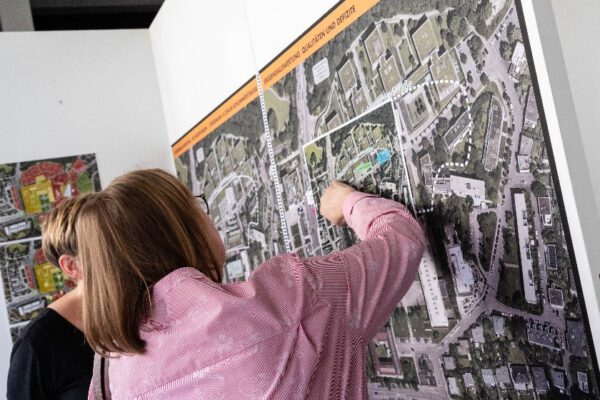
© Foto: Ralph Fisher / Freunde der Weissenhofsiedlung
The Weissenhof Estate celebrates its 100th birthday in 2027! The exhibition provides information about future developments in the Weissenhof Estate and the plans for the visitor and information center, which will be built by 2027. On display are the competition results for the new exhibition and the tour of the Weissenhof Estate as well as the results of a competition for the workshop room in the new visitor and information center. In addition, the results of a workshop on neighborhood development held by the Friends of the Weissenhof Estate.
The exhibition takes place in the rooms of a residential building from 1928, built on the civil servants’ estate by architect Adolf Gustav Schneck. The temporarily vacant building is located opposite the site of the future visitor and information center.
Opening
Mon, May 12, 2025, 8 p.m.
Venue
Haus Jung, Beamtensiedlung am Weissenhof
Am Weissenhof 2, 70191 Stuttgart
Duration and opening hours
Sat, May 17 – Sun, July 13, 2025
Sat, Sun, public holidays 12 – 5 pm
Free admission
Guided tours
Sun, May 18, 2025
12, 14 and 16 pm
Meeting point: Weissenhofwerkstatt im Haus Mies van der Rohe (Am Weissenhof 20)
Free admission
Organizer
Freunde der Weissenhofsiedlung e.V. / Weissenhof Museum in the Le Corbusier House
We would like to thank the City of Stuttgart and the Wüstenrotstiftung for the financial support.
 The exhibition is part of the IBA’27 Festival #2! Click here for the complete festival program
17.05.-
13.07.2025
13.07.2025
EXHIBITION
Barkow Leibinger: in situ – Weissenhof
Barkow Leibinger: in situ – Weissenhof
17.05.-
13.07.2025
13.07.2025
The city of Stuttgart is building a new visitor and information center at Weissenhof by 2027. DEsigned by the internationally renowned architectural firm Barkow Leibinger. It will be the central starting point for all people who want to visit the Weissenhof Estate in the future and learn more about the history of this international icon of modern architecture. In the exhibition BARKOW LEIBINGER: IN SITU – WEISSENHOF, you can find out more about the innovative architecture of the visitor and information center and the multi-award-winning office by means of drawings and material samples.
Opening
Mon, 12 May 2025, 7 pm
Venue
Weissenhof Werkstatt im Haus Mies van der Rohe
Am Weissenhof 20, 70191 Stuttgart
Duration and opening hours
Sat, 17 May – Sun, 13 July 2025
Sat, Sun, public holidays 12-17 h
Free admission
Organizer
Freunde der Weissenhofsiedlung e.V. / Weissenhof Museum in Le Corbusier House
We would like to thank the City of Stuttgart and the Wüstenrotstiftung for the financial support.
The exhibition is part of the IBA’27 Festival #2! Click here for the complete festival program
09.05.-
24.05.2025
24.05.2025
IBA’27-Festival #2
Program at the Weissenhof Estate
Program at the Weissenhof Estate
09.05.-
24.05.2025
24.05.2025
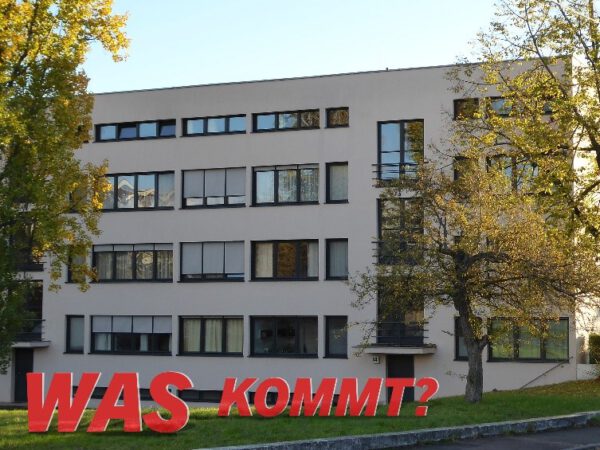
© Pictures: IBA’27 | Ralph Fisher / Freunde der Weissenhofsiedlung | The Baukunst Dynamites / Freunde der Weissenhofsiedlung
The IBA’27 Festival #2 marks an important milestone on the way to the International Building Exhibition 2027. It focusses on the current IBA projects, their innovative planning approaches and ideas as well as the people who implement the projects. The festival offers guided tours, festivities, panel discussions and hands-on formats. You will gain insights into the current status of the projects as well as on the future of the building sector and living together in the Stuttgart Region. For the full program of the IBA’27 Festival click here.
The Weissenhof Museum is also participating with a program
In 2027, the Weissenhof Estate will take centre stage. The estate is celebrating its 100th anniversary and is therefore also a central reference for IBA’27. By 2027, a new visitor and information centre will be built by the state capital Stuttgart. It will be the central starting point for all people who visit the Weissenhof Estate in the future to learn more about the history of this international icon of modern architecture. The new building is intended to support Le Corbusiers semi-detached house and preserve it for future generations. The house has been awarded the UNESCO World Heritage seal and accomodates the Weissenhof Museum. As a former residential building, it is already too small for the ever-increasing number of visitors.
The new visitor and information centre, designed by the internationally renowned architects Barkow Leibinger, has been designated an ‘IBA project’. It is therefore at the centre of the Weissenhof Museum’s program for the second IBA’27 festival. In an exhibition at the Weissenhofwerkstatt im Haus Mies van der Rohe, displaying floor plans and others as well as material samples you can find out more about the innovative architecture of the building and the multi-award-winning office.
Another exhibition organised by the Friends of the Weissenhof Estate can be seen in a house of the “Beamtensiedlung am Weissenhof” that is only open to the public for a short time. The exhibition deals with the developments in the Weissenhof Estate throughout the upcoming years.
Here is an overview of our program:
EXHIBITION
BARKOW LEIBINGER: IN SITU – WEISSENHOF
Location
Weissenhofwerkstatt im Haus Mies van der Rohe
Am Weissenhof 20, 70191 Stuttgart
Opening
Mon 12 May 2025, 7 pm
Duration and opening hours
Sat, 17 May – Sun, 13 July 2025
Sat, Sun, public holidays 12-17 h
Free admission
EXHIBITION
Future Weissenhof 2027+ What remains? What is coming? What goes?
Location
Haus Jung, Beamtensiedlung am Weissenhof
Am Weissenhof 2, 70191 Stuttgart
Opening
Mon 12 May 2025, 8 pm
Duration and opening hours
Sat, 17 May – Sun, 13 July 2025
Sat, Sun, public holidays 12 – 5 pm
Free admission
GUIDED TOURS
Future Weissenhof 2027+
Date
Sun, 18 May 2025
12 noon, 14 and 16 pm
Duration approx. 45 minutes, without registration, free admission
Meeting point
Weissenhofwerkstatt im Haus Mies van der Rohe
Am Weissenhof 20, 70191 Stuttgart
We would like to thank the City of Stuttgart and the Wüstenrotstiftung for the financial support.
06.05.2025
New name: “BIZ” becomes Weissenhof.Forum